 Photo: TheGrint
 Not Battling for Bogeys
About a year ago I pulled my Arccos data apart and closed with the intention to create a plan and follow-up.
This is it, 9-months later with new mechanics and a new perspective. October began the off-season and serious focus on rebuilding my swing. The rebuild itself is only about nine months old, and most of that ran through the winter. So this is an early read. The real test is the season ahead, and I’ll know how much progress I’ve made this coming September.
In the time since, Erik Barzeski and I have been rebuilding my swing from the ground up, starting with weight transfer. The fairway numbers say it’s working. The scorecard hasn’t caught up. For the first time, I’m okay with that.
The last 20 rounds, averaged out.
The Rebuild
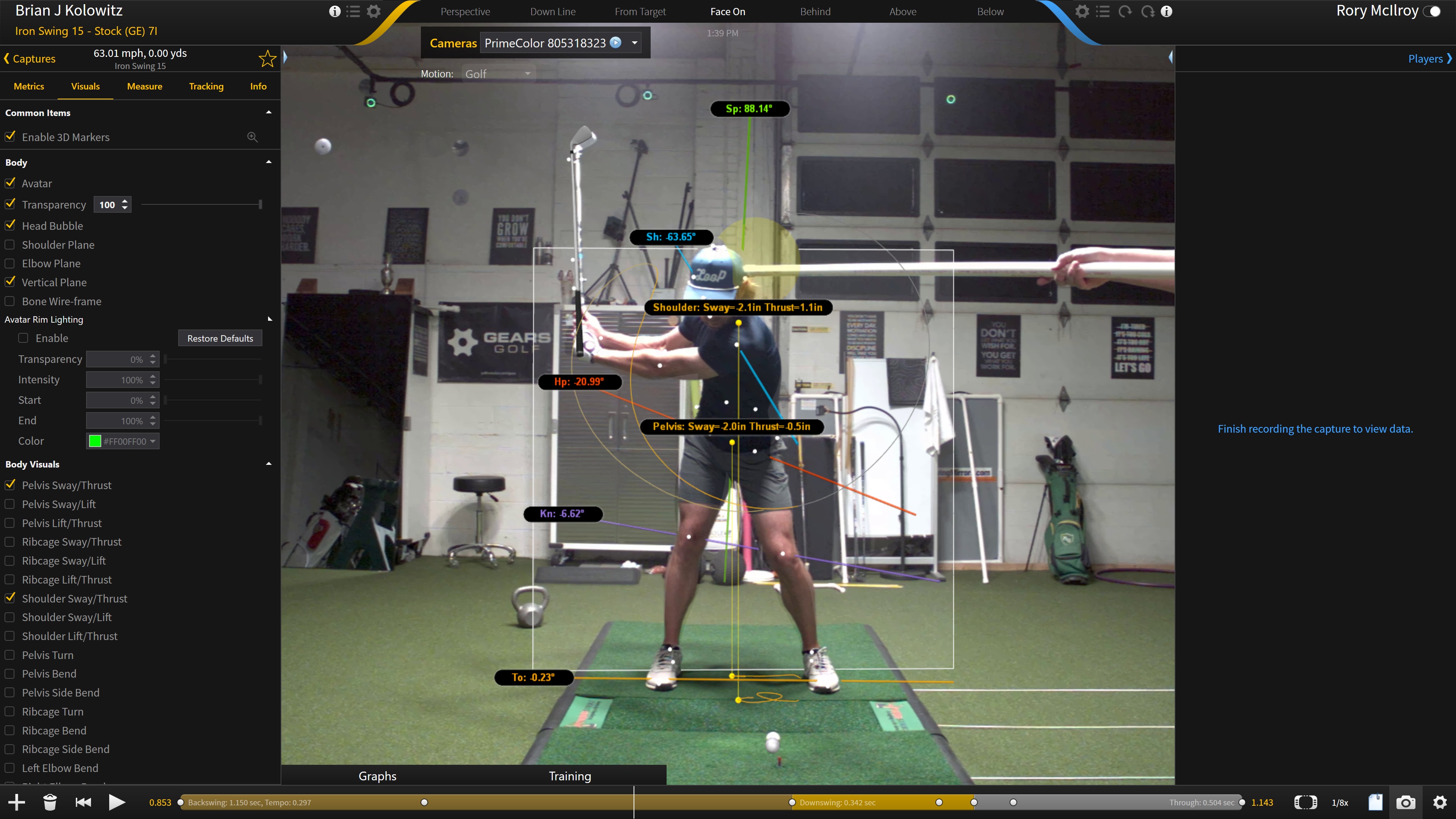
We started with the ground. Weight transfer first, then body positioning, then arm depth. None of it was a tweak.
We’re rebuilding my swing from the ground up. Literally the ground up — starting with weight transfer, body positioning, arm depth.
That’s the kind of work that gets harder before it gets easier. Mid-rebuild swings are inconsistent by design — you’re undoing one pattern and grooving another at the same time. What I notice now, deep into the work, is that the good shots feel different.
Same or better shots, distance, flight paths, with less effort and more repeatability.
Less effort, more repeatability. The shots that used to require a perfect tempo and a held breath now come off something closer to neutral. Distance is the same or up. Flight is cleaner. A good shot doesn’t cost what it used to.
What Moved
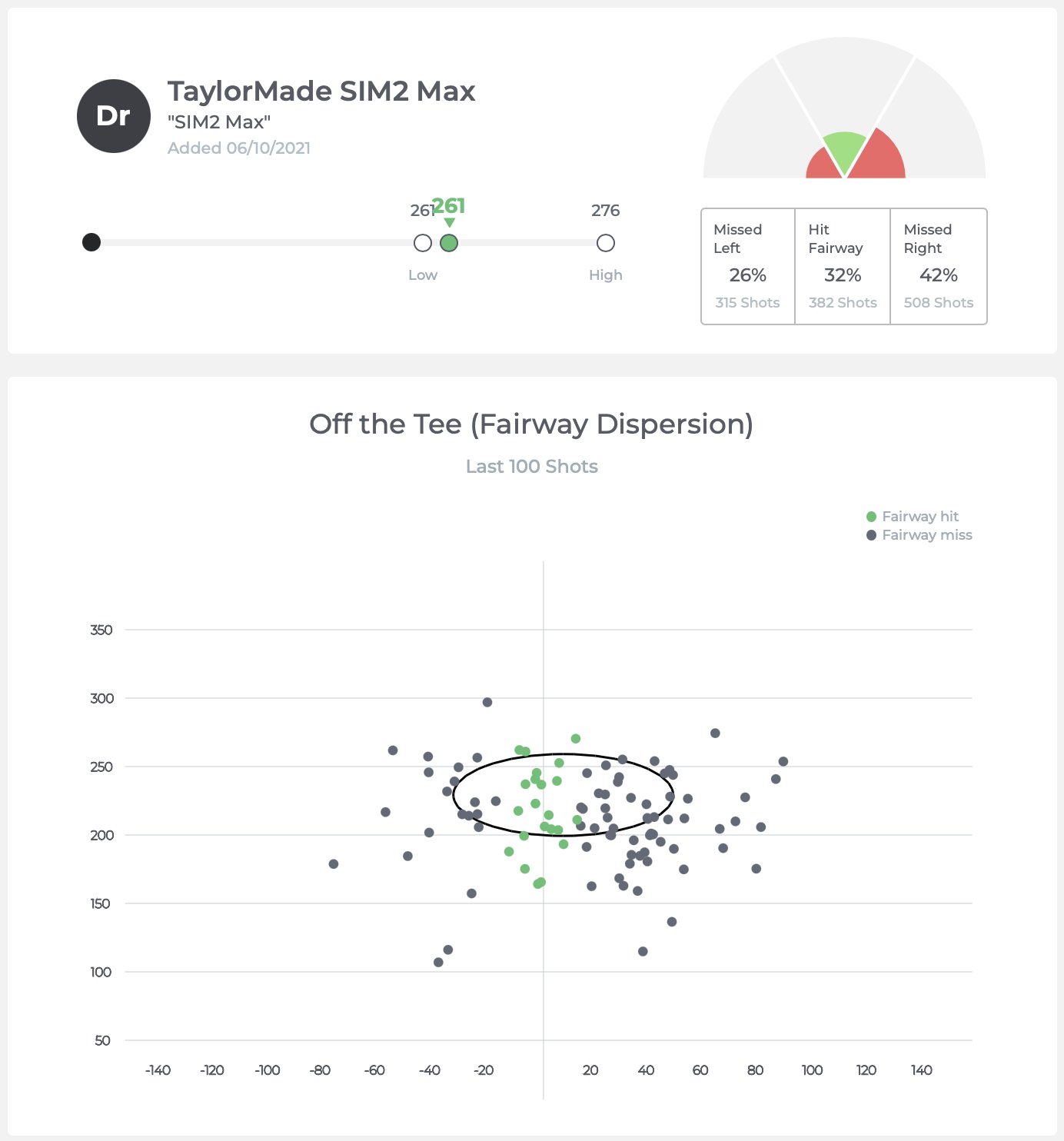
The old post called my driver the disaster line: 32% fairways, with 42% of misses ending up right. It was the number I couldn’t fix.
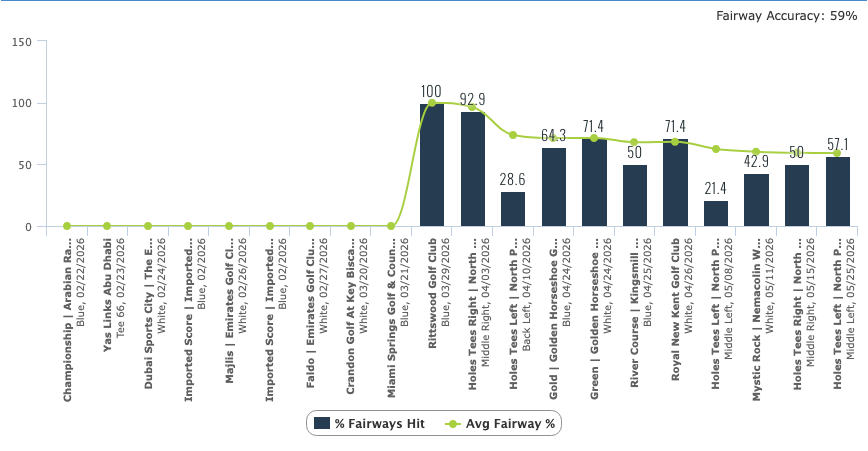
The Grint shows 59% fairways now, with the right miss cut from 42% to 17.8% and the chronic short miss essentially gone at 1.3%. The number that screamed loudest a year ago is roughly half-fixed.
Fairway accuracy by round. The lone 100% is a single thin-sample round — I’ve never actually striped every fairway, so treat that one as noise.
One note on the data: I’m not on Arccos anymore — I track with TheGrint now. This is the same body of work measured with a different tool, so the round-by-round numbers don’t map one-to-one with the original 100-shots-per-club analysis. The story underneath is the same.
What Didn’t
GIR. Still 31%, still 5.7 greens a round, basically flat from a year ago.
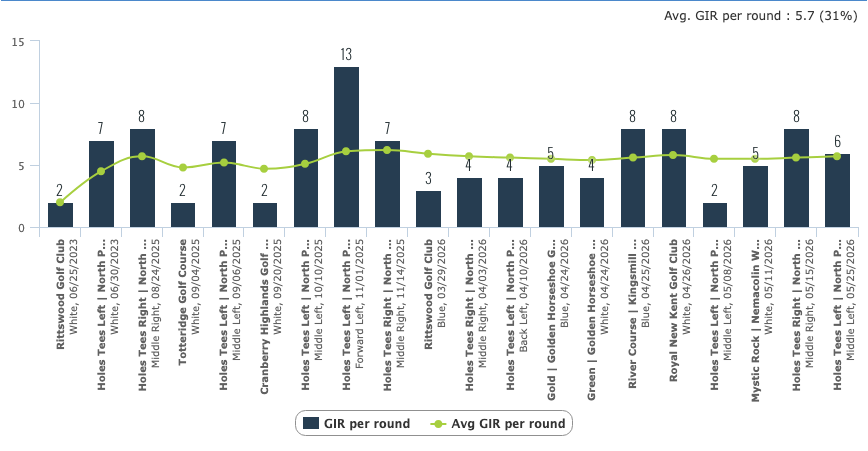 Greens in regulation by round.
More fairways and the same greens tells me the leak moved. The next stroke is the one that needs work. That’s course management and club selection — playing short of trouble when the smart call says so. The swing was only ever the loudest problem.
Repeatable Swing, Not Yet Repeatable Scorecard
The 59% fairway number is the season average. The round-by-round bars are honest about the rest. The good days hit 92.9% and 71.4%. The bad ones land at 21.4%, 28.6%. A real swing lives in those highs. The lows are what the mid-rebuild looks like from inside.
Changing a swing while still playing rounds means the old patterns are still in there, waiting for a bad lie or a tired hole. They come out less often than they used to. They still come out.
The scores say the same thing the fairways do. Most rounds still sit in the low 90s, averaging 92.6, with the occasional 84 to show what the new swing can do on a clean day.
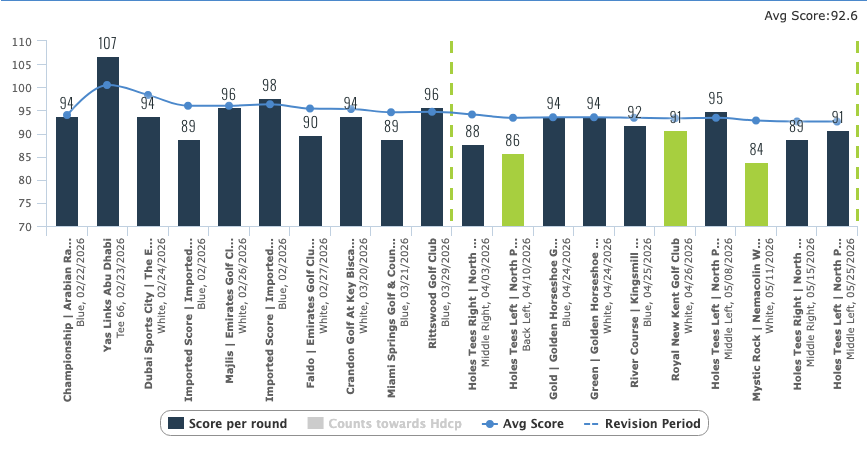 Score by round. The average hasn’t moved much; the good days hint at where it’s going.
I’m seeing it in the swings and the shots but not yet in the scores, and that’s ok.
The patience here is built on the chart. The upside isn’t theoretical at this point. It’s already shown up at 92.9% and 71.4% off the tee, and at that 84. The work is to make those numbers the floor instead of the ceiling.
Not Battling for Bogeys
What’s actually different is harder to put in a chart. The bad holes used to spiral. A bad drive turned into a punch-out, the punch-out into a bad iron, the bad iron into a long-side chip, the chip into a long putt, the long putt into a double. The damage carried into the next tee with me.
The bad holes still happen. They don’t compound the way they used to.
I’m not battling for bogeys. I might get them, but it’s not a battle.
That’s the change that doesn’t show on the card yet. The spirals are getting tighter. The lower scores are on their way.
The plan that comes out of this one is patience plus strategy. The proof is already showing up everywhere except the one place I keep looking.