Program #6 Complete: What 28 MPH Gained Looks Like Up Close
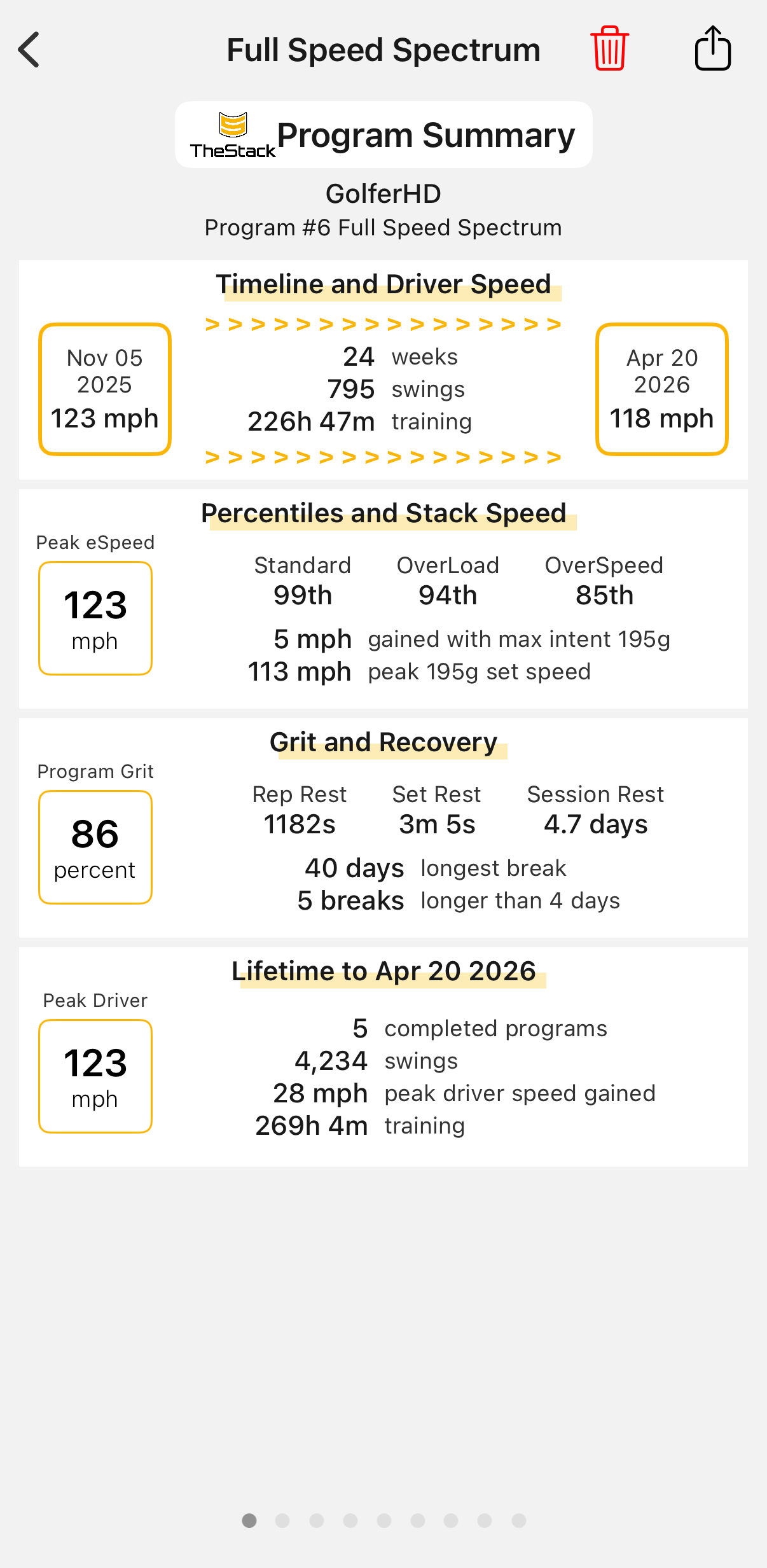
I just wrapped Program #6 on The Stack System — my second run through the Full Speed Spectrum — and on paper, the numbers look like a step back. I started at 123 mph and finished at 118 mph. If you’re tracking along on the training page, you might wonder: what happened?
The answer is actually the whole story.
The Big Picture First
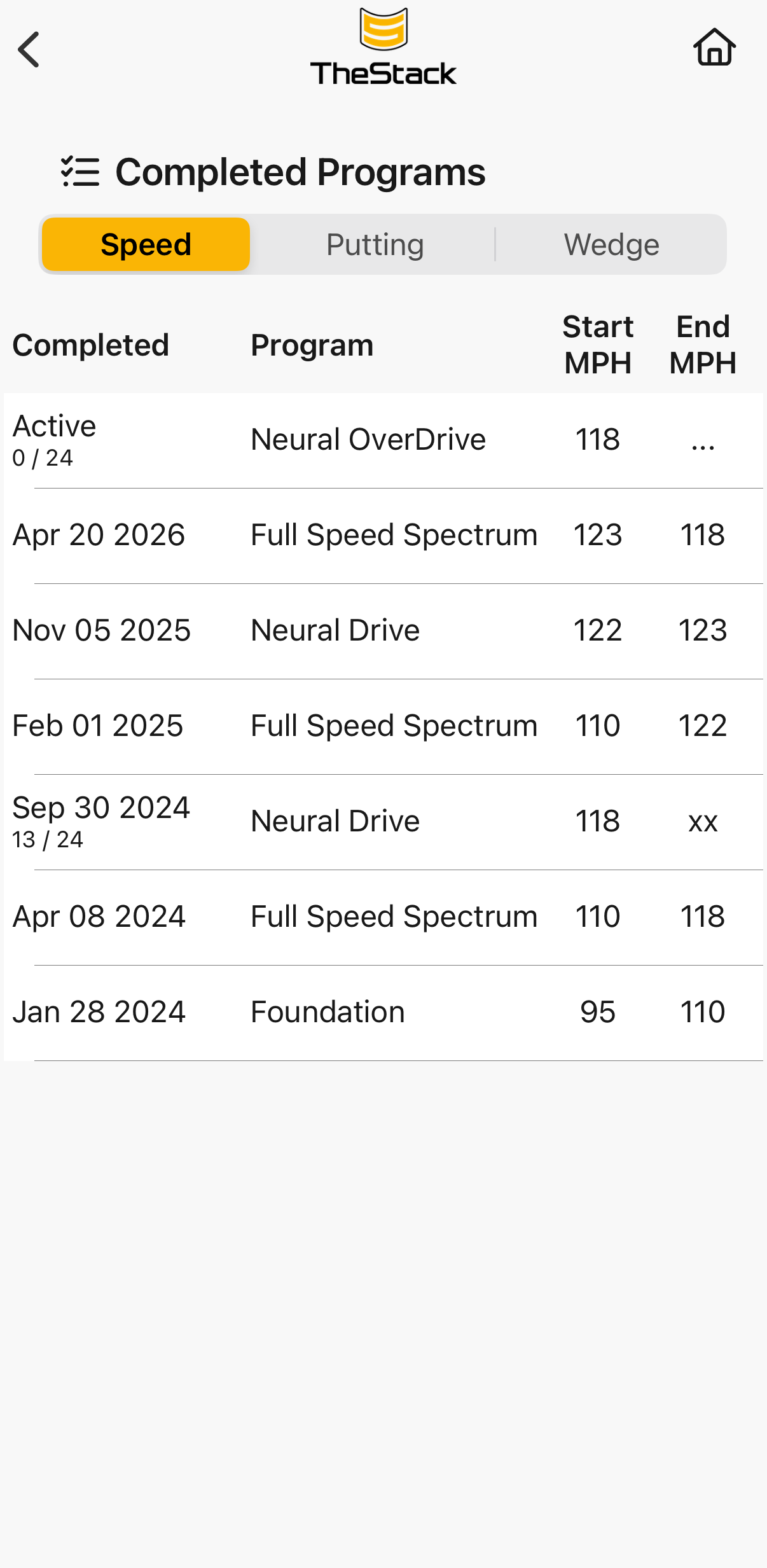
Before we get into this specific program, let’s zoom out. When I started with The Stack in January 2024, I was swinging a driver at 95 mph. Today, my lifetime peak is 123 mph — a gain of 28 mph across 5 completed programs, 4,234 swings, and over 269 hours of training.
That’s not a typo. 28 miles per hour.
Here’s the full arc alongside the program I just finished:
You see a journey, not a straight line. Some programs moved the peak up. Some held the floor. This one did something different.
Why the End Number Was Lower — And Why That’s Fine
This program ran from November 5, 2025 to April 20, 2026 — 24 weeks, 795 swings, nearly 227 hours of training. It had five breaks longer than four days, including one stretch of 40. Life happened, work happened. What I didn’t skip was travel: the Stack came with me to Dubai — eight rounds in six days plus a two-day flight adventure getting there — and I got a session in between rounds on the trip.
So this wasn’t a program where I was clocking perfect daily sessions at home. It was a program I ran around real life and real golf.
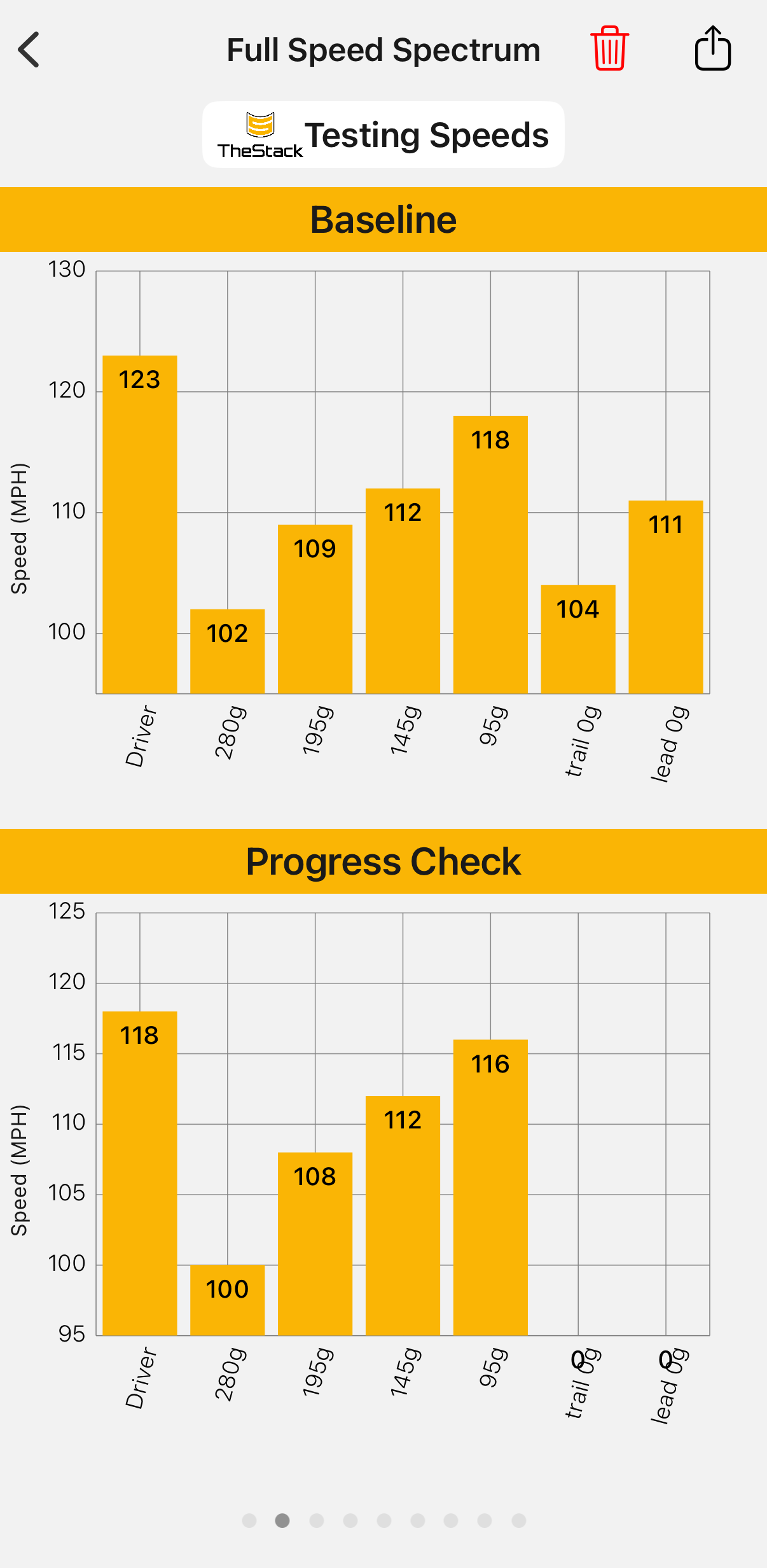 Baseline (top) vs Progress Check (bottom) across every club in the testing protocol. Driver dipped 123 → 118. The lighter stacks — the overspeed stuff where the real ceiling lives — mostly held. The lead/trail isolation scores didn’t register on the final test; those are the ones I’m most curious about next time around.
The headline number moved backwards. But my baseline coming in was 123 mph, and the reason it was 123 was part of the problem. I’ve been doing serious swing work with my coach Erik Barzeski through Skillest, and the physics of what was producing my old peak wasn’t sustainable.
My old swing was long — probably too long — and driven almost entirely by arms. No ground reaction forces. No proper weight shift. No real sequencing. I could max out the radar gun, but I couldn’t actually use that swing to hit a golf ball.
A 118 mph swing I can repeat and control beats a 123 mph swing I can’t.
What We’ve Been Building
Working with Erik, we’ve been rebuilding the swing from the ground up:
- Ground reaction forces — learning to load and push off the ground the way players like Rory and DeChambeau do. If you want to go deep on this, Sasho MacKenzie — one of the brains behind The Stack — has been publishing on exactly this for years. The Stack Learning Library is where a lot of his work lives and it’s genuinely the best free biomechanics resource in golf right now.
- Proper arm movement — arms move up and down, not back. The backwards movement of the club comes from rotating your chest.
- Weight shift — loading to the trail leg, transferring to the lead leg.
- Club head release — actually letting the club head go through the hitting zone.
That’s a lot of moving parts to rewire at once. And as you go through those changes, you have to learn the new movement and learn how to generate speed within it. Speed training and swing training have to coexist — and that balance takes time.
Speed Training Is Still Working
So where is the speed? Two places — and they’re worth looking at separately.
First, the raw ceiling. Even mid-rebuild, overspeed training kept touching the top of the bag:
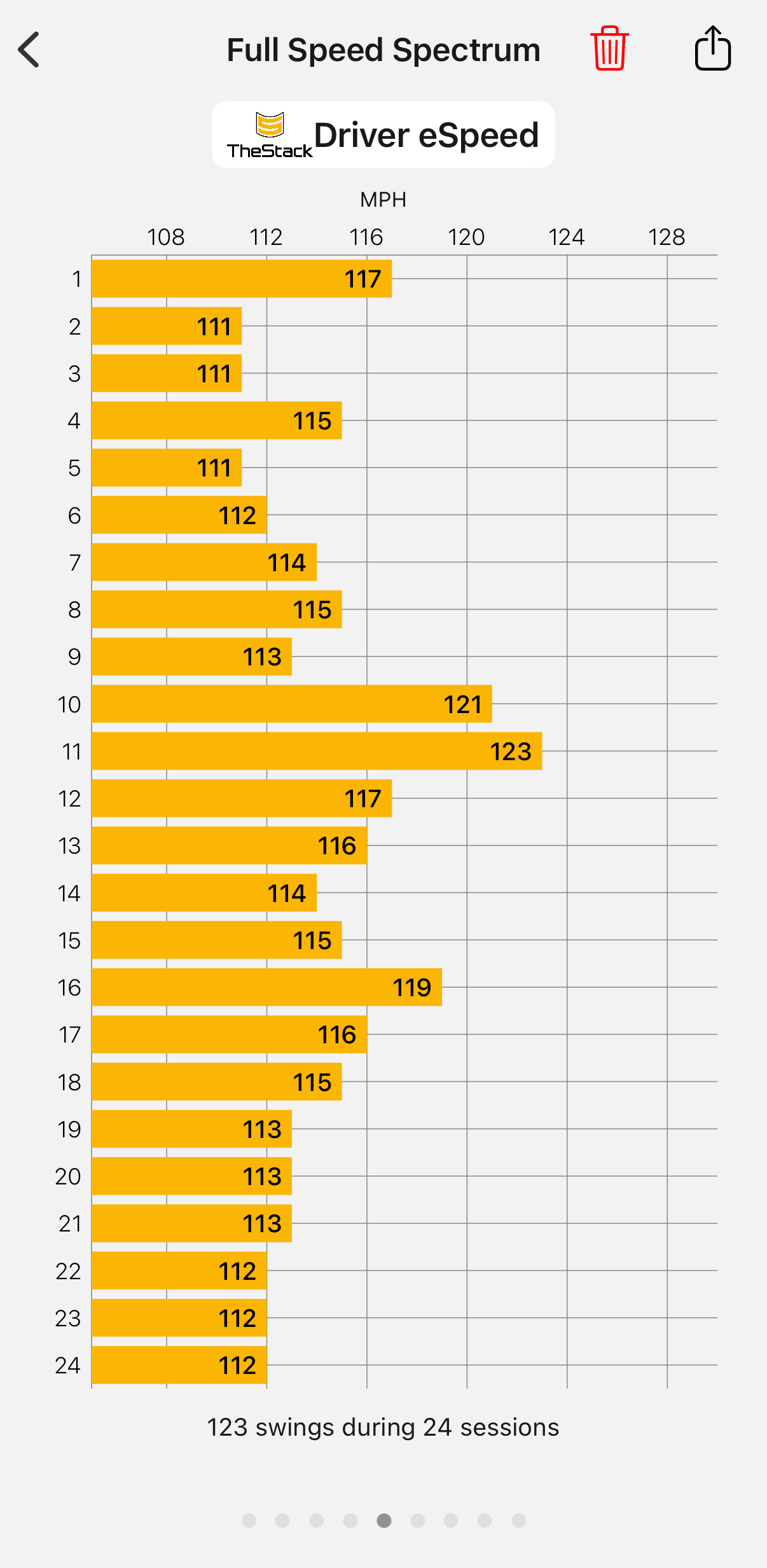 Driver eSpeed, every session of the program. A 123 peak on session 11, most sessions hanging in the 112–119 band. The ceiling is still being touched regularly — it just isn’t showing up on test day because the test is intentionally controlled.
Second, where I actually land on the bell curve. This is the image that tells the real story:
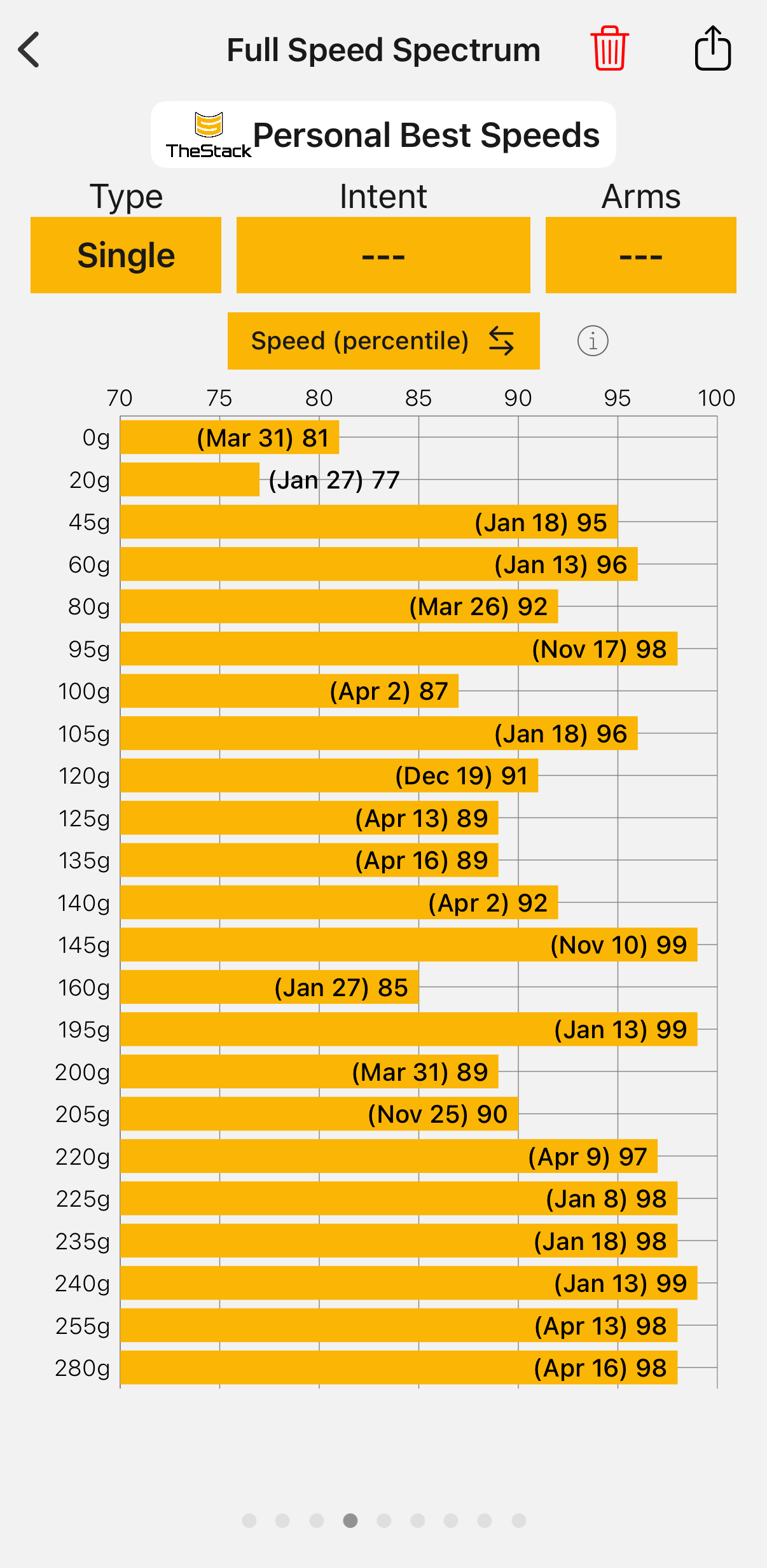 My single-swing personal bests as percentiles against Stack’s global user pool. 60g, 95g, 105g, 145g, 195g, 220g, 225g, 240g, 255g, 280g all sit at the 96–99th percentile. That’s not one lucky swing. That’s a two-year pattern.
Even with a swing in transition, I’m at the top of the distribution for my speed tier. The Stack is doing its job — raising the ceiling, building the neurological pathways that tell my muscles to move fast. The swing work is where that speed gets translated into something a golf ball can be hit with.
And the distance potential numbers reflect that:
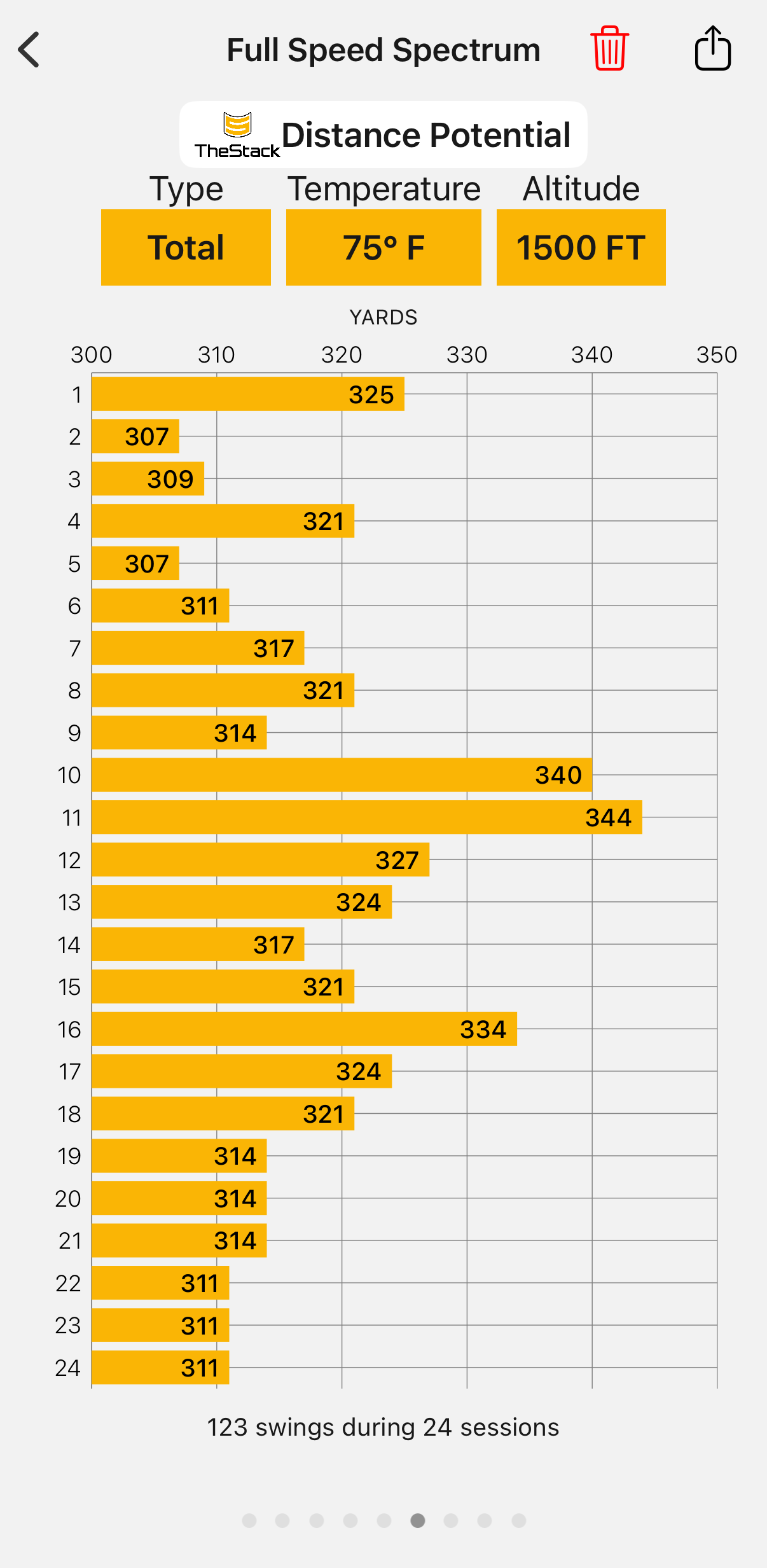 Distance Potential at 75°F / 1,500 ft. Peak at 344 yards, with a big cluster in the 311–325 range. These are calculated from the Stack’s swing data, not course drives — but they track what my real distance ceiling looks like in friendly conditions.
344 yards isn’t a number I was anywhere near three years ago.
What “Cruising Speed” Actually Means
One of the best concepts The Stack teaches is the difference between peak speed and cruising speed — the speed where you can swing without trying too hard and still hit it consistently. You can see it in the 195g training sessions:
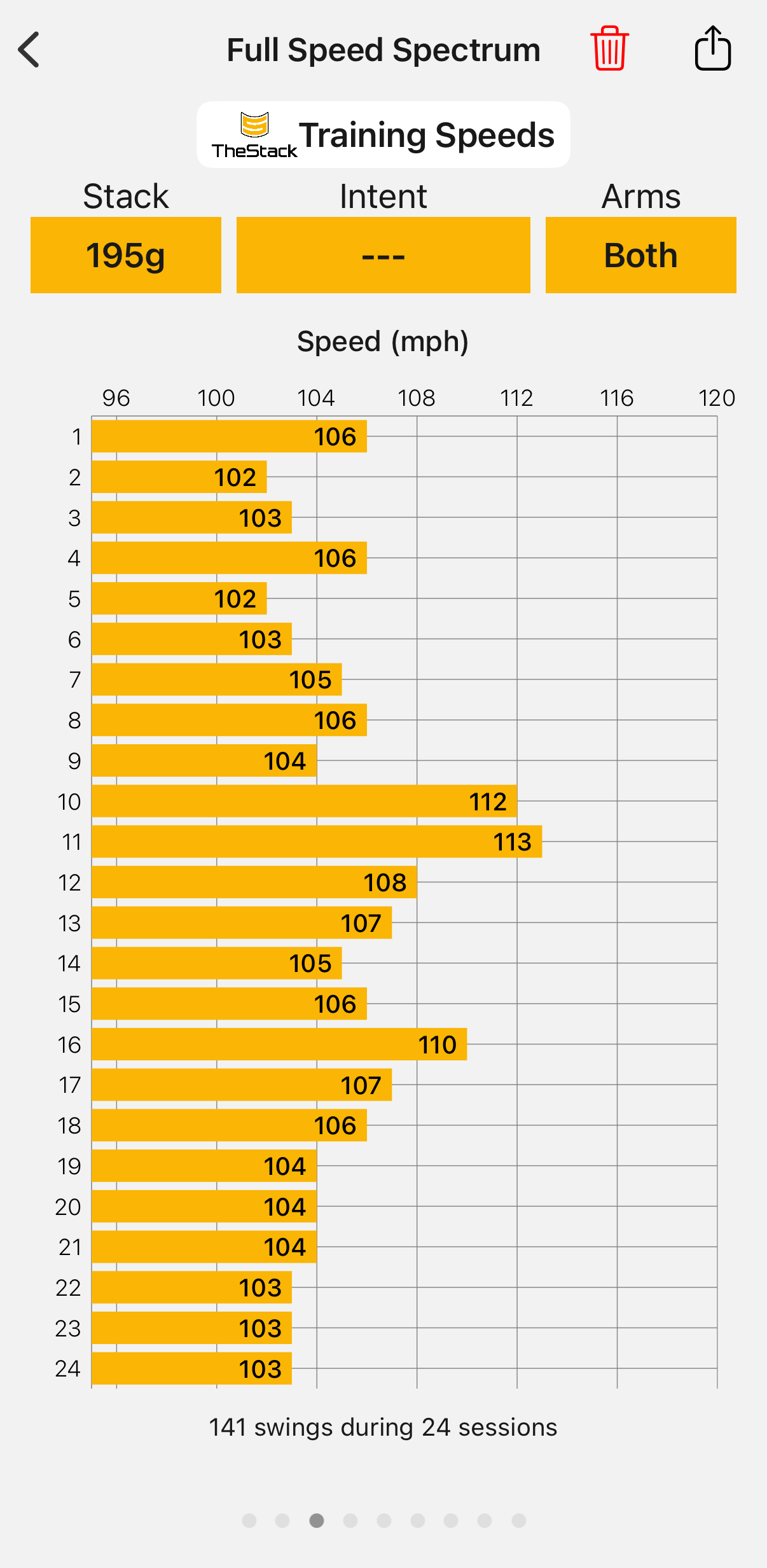 195g stack, 141 swings across 24 sessions. The band is tight — 103–108 is the daily number, 112–113 shows up when I reach for it. That tight band is what “cruising” looks like on a Stack: repeatable, not maximal.
When I started this journey, a 220-yard drive was a big one. Last season, pushing the old swing, 300-yard drives weren’t rare — but they weren’t reliable either, and the misses were brutal. This season, with the swing changes, the number has dialed back to 260–270 — but those drives are straight. Two-way misses are mostly gone. Big slices are gone. I’m hitting it 260–270 without much effort.
My cruising speed is probably around 110 mph. That’s usable speed. That’s what translates to the course.
And I’ll tell you — going from the shortest person in the group to, most rounds, the longest person in the group is something. A playing partner, a stranger, somebody in a tournament — it comes up. That kind of feedback doesn’t lie.
The Personal Bests in Raw MPH
The percentile chart up above shows where I sit against other users. Here’s the same data in absolute terms:
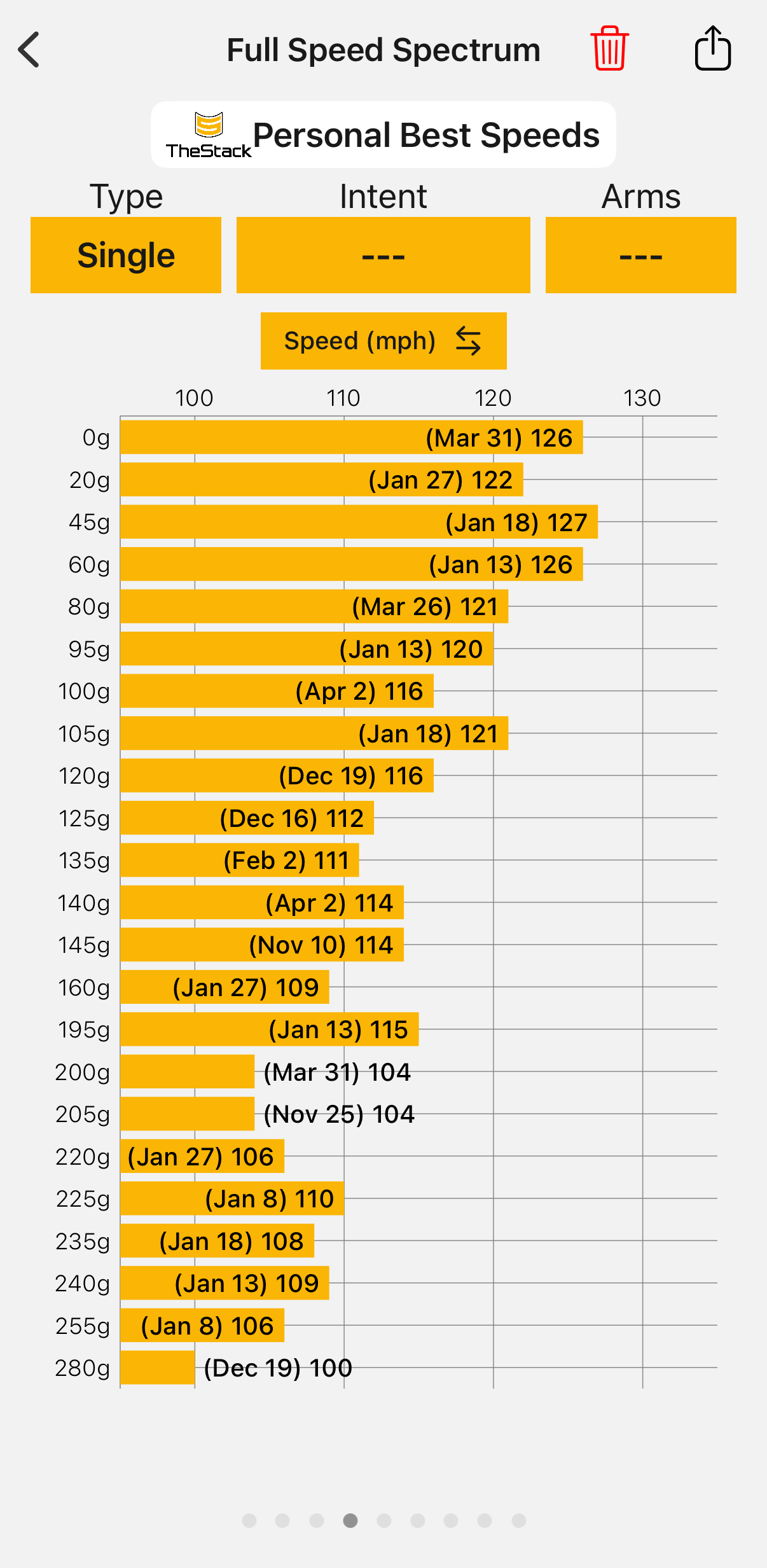 Single-swing MPH personal bests by stack weight — from the 0g driver (126) all the way down to 280g (100). Most of those PBs happened in the Jan–Apr window of Program #6, which is another way of saying the ceiling is still rising even while the test-day average dropped.
These aren’t flukes. They’re a consistent pattern of speed at the top of the range, built up over two-plus years. If you want to slice the PB data yourself, the training page has the same numbers with an MPH / Percentile toggle.
What’s Next
The Stack just pushed me into Neural OverDrive — a new program starting at 118 mph. And I’m not going into it chasing a number.
I’m going into it with the right tools: Erik for the swing, The Stack for the speed, and Stack’s wedge program being added to the mix for the short game. I’ve got the team. I’ve got the system. The job now is finding the right balance — swing practice, speed training, wedge work — and letting the results compound.
There’s going to be variation in the journey. Scores go up, scores go down. Numbers spike, numbers settle. The only thing that matters is the long-term trend — and that trend, over two years, is unmistakable.
28 mph gained. And we’re just getting started.
GolferHD is documenting one golfer’s pursuit of a 5 handicap before turning 50 — the 5 by 50 Challenge. Follow along for training updates, course reviews, and everything in between. The Stack System link in this post is an affiliate link — code GOLFERHD saves you 10%.